 A Golden Rule Company
5 Reasons You’re Not Hearing Back After Job Applications (Even If You Meet All Requirements)
Last Updated on June 27, 2026 by Jessica Hernandez
Applied to dozens of jobs with no response? Here are 5 real reasons you’re not hearing back after job applications and what actually works in 2026.
You’ve probably been there: You find the perfect job posting, and it’s like someone wrote it specifically for you, straight from your resume.
Every requirement? Check. Every preferred qualification? Double check.
You craft the perfect application, hit submit, and then… nothing. Not even a ‘thanks, but no thanks’ email.
It’s maddening. You know you’re qualified. You know you could do the job well. Yet your inbox remains stubbornly empty, and you start questioning everything about your resume, your experience, and maybe even your worth as a professional.
The silence feels personal, but I promise you – it’s not.
If you’re reading this and nodding along, you are not alone. In fact, this experience is so unbelievably common (50% of my 151K newsletter subscribers report dealing with this), and it has nothing to do with your qualifications and everything to do with what’s happening behind the scenes during the application process.
Even the most qualified candidates struggle with getting responses, and there are legitimate reasons why this happens that have absolutely nothing to do with your ability to do the job.
Before you start second-guessing your entire career (and maybe even your sanity), let me share what’s really happening that’s causing the complete silence and exactly what you can do to get around it.
In this article, I’ll explore five reasons your applications go unanswered (or are automatically rejected) and offer tips to navigate around these obstacles. Let’s jump in.
Why Am I Not Hearing Back From Job Applications? (The Short Answer)
You’re not hearing back from job applications because the hiring system itself is broken – not because you’re unqualified. In 2026, the average job board converts applications to hires at only 6%. LinkedIn’s rate is 2.9%. Indeed’s is 3.1%.
That means for every 100 applications submitted on LinkedIn, fewer than 3 result in a hire.
There are five specific reasons this is happening, and none of them are your fault. But knowing them gives you the power to route around them entirely.
Understanding Why Applications Go Unanswered
The frustration you’re feeling with the lack of responses you’re getting is completely normal. You expect that when you meet all the qualifications for a job you’ll get a response. The silence is unjustified and so you rightfully feel disappointed.
I wish the application process, ATS, and AI screenings were easier to understand and all worked similarly. The reality is, though, that they don’t. And therein lies the issue.
Yesterday a job seeker shared this, “I spent 4 hours tailoring my resume with ChatGPT and your course literally in front of me. The job was for a past employer I left in good standing with, and I had a referral.
I received an automated ATS rejection at 6:15 am this Thursday morning. I was crushed. How did this happen? How did my resume fail the test again?”
She met every qualification, tailored her resume, and still got an auto-rejection from the system.
That’s not the only reason job seekers aren’t getting responses to their applications. Let’s explore all the factors (or if we’re being honest – the obstacles) you’re facing every time you click apply.
Reason 1: An ATS Filtered You Out Before a Human Saw Your Resume
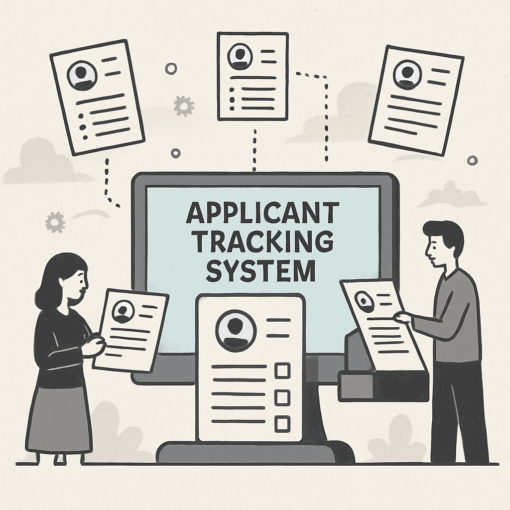
An Applicant Tracking System (ATS) – software that automatically screens resumes before a human ever reads them – is the first obstacle between you and an interview. Most mid-to-large companies use ATS platforms like Workday, Greenhouse, or Taleo to filter applications by keyword match, formatting compliance, and file type before a recruiter sees a single name.
Here’s a real example that happened inside my community. A job seeker spent four hours tailoring her resume – with ChatGPT and my course open in front of her – for a role at a former employer she’d left in good standing. She had a referral. She received an automated ATS rejection at 6:15 a.m. the next morning.
She met every qualification. The ATS still rejected her.
What you can do: Tailor your resume to mirror the exact language in the job description – not paraphrased synonyms, but the specific words the employer used. ATS software matches strings, not meaning. Also, stick to clean formatting: no tables, no graphics, no text boxes. Save as a .docx unless the posting specifies otherwise.
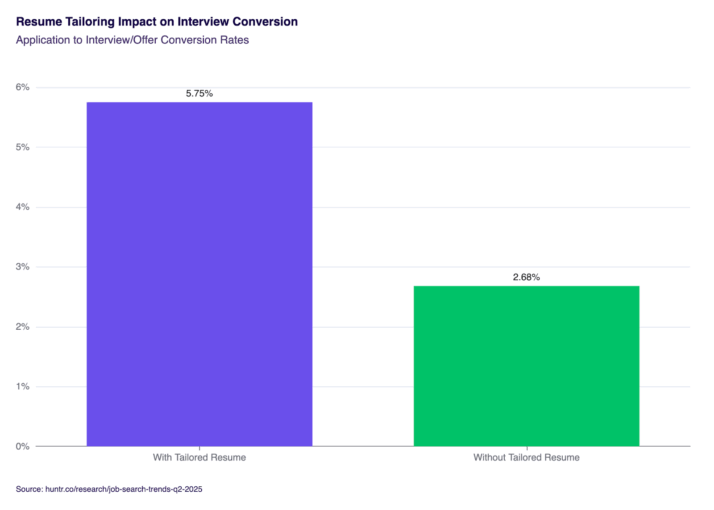
This is one reason why you hear so many career experts preach about the importance of tailoring your resume to the role. We’re not making it up. The data backs up this strategy. Huntr.co in it’s Q2 2025 Job Search Trends Report found that customized resumes get a 2.1X higher interview rate than generic ones.
Keyword optimizing has it’s limitations, though. Yes, absolutely use ChatGPT or Claude to identify the hard skill keywords and requirements inside the job description and include those within your resume.
But it’s equally important to make sure your resume is telling a strategic story that aligns with the needs of the role and company.
Here are some strategies to improve your chances with an ATS:
- Study the job description for important keywords
- Use clear and simple formats for your resume
- Avoid excessive graphics, some are OK and help when you get a human review
- Align your skills with those emphasized by the employer
There’s a way to work around and still get the interview, even if you get the auto-rejection.
Further Reading: Why referrals have a 43% hire rate compared to 3% on job boards.
Reason 2: Internal Candidates or Referrals Take Priority
Even if you meet all the qualifications companies often prefer promoting from within. Internal candidates are familiar with the company culture, which makes their transition into new roles smoother. Employers value this continuity, as it minimizes training costs and the risk of poor cultural fit.
My husband was recently up for a promotion to a Director role in his company. His direct supervisor wanted him in the role and advocated for him. The executive HR team still made her post the role and review external candidates. His supervisor thought this was a ridiculous waste of time because she’d been training him to be her successor. I felt bad for the external applicants who landed interviews and got their hopes up knowing the role was going to go to my husband.
Sure enough, he got the promotion but the process took three months when it should have only taken one (or less) and was a waste of everyone’s time. This shows the brokenness of hiring practices inside companies. While it’s extremely frustrating as a job seeker it’s also something you have no control over. Just because the hiring team decided to go in another direction doesn’t mean there is something deficient in you, your qualifications, or your experience.
They may have already had their mind made up to go with the internal candidate and their leadership team was making them go through the vetting process anyway.
Referrals also carry significant weight in hiring decisions. Employees tend to refer candidates who align well with company values and expectations. This provides employers with a trusted selection and reduces hiring uncertainties.
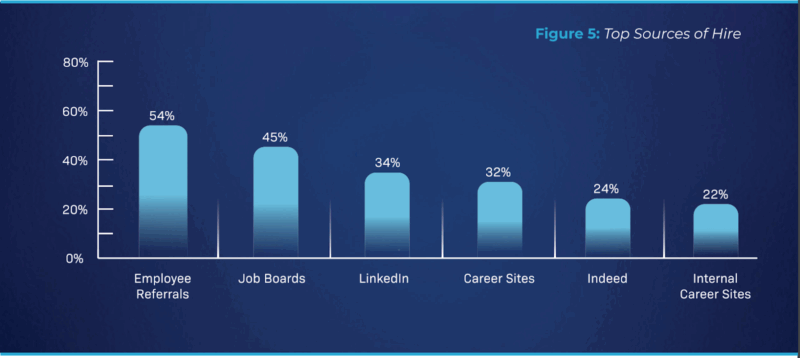
Companies prefer employee referrals and rate them as their top source of hire.
Hiring managers have limited resources and time. So they tend to favor referrals because they are from someone they already know, like, and trust. This means that even highly qualified external applicants might fall by the wayside.
Companies consider these advantages of internal candidates and referrals:
- Referred candidates stay twice as long
- Referred candidates are a better quality hire
- Shorter onboarding periods due to existing knowledge
- Most importantly, the know, like, and trust factor.
If you have a referral, you are 5X more likely to be hired than candidates without one. One out of eight referred candidates is hired, and if you’re the referred candidate in the interview group, you have a 25% chance of being offered the job.
Candidates without a referral have a 1.7% chance of landing the job. You have to work 14 times harder without a referral.
For those interested in the data, I’ve linked the company side of employee referrals from the Employee Referral Platform above, and the candidate referral data comes from Gerry Crispin here.
So let’s break this down: if you have a referral, you increase your chances of being hired by 5X, and if you do not have a referral, you’ll have to work 14 times harder to get the job.
In other words, if you’re competing against an internal applicant or someone with a referral you’re much less likely to get a response to your application.
Remember my client who applied and ATS shut her down immediately? Well, she asked her referral if he’d be kind enough to get her resume in front of the eyes of the actual hiring manager, since they were in the same department. By the afternoon, he told her they pulled it from the system and a recruiter would be reaching out to her.
She’s in the interviewing process now.

Reason 3: The Hiring Process Changed Internally
Another reason for the lack of response is that things are shifting rapidly in the 2025 market. Each quarter of this year has seen vastly different headlines and major shifts. Layoffs coming and going, surges in certain sectors, federal cuts, policy changes…Anyone else getting whiplash from the rapidly changing headlines?
Budget cuts, hiring freezes, department changes, restructuring – I just saw Starbucks announced a $1 billion restructuring plan that will cut 900 jobs.
If a department undergoes changes, hiring priorities might shift, causing indefinite delays.
These internal changes that can impact the hiring process:
- Departmental restructuring affecting job needs
- Modifying role specifications to better suit evolving organizational goals
- Budgetary decisions leading to hiring freeze
These adjustments probably aren’t going to be visible to you or shared with applicants. Yet, they significantly influence how and when decisions are made. I still don’t agree that nonresponses are right. I believe companies should do better about communicating with applicants. But I share this so you know that again – it’s not a deficiency in you, your application, your resume, experience, age, or any other factor. It’s one of those uncontrollable circumstances that are a part of life.
Reason 4: High Volume of Applications Overwhelms Employers
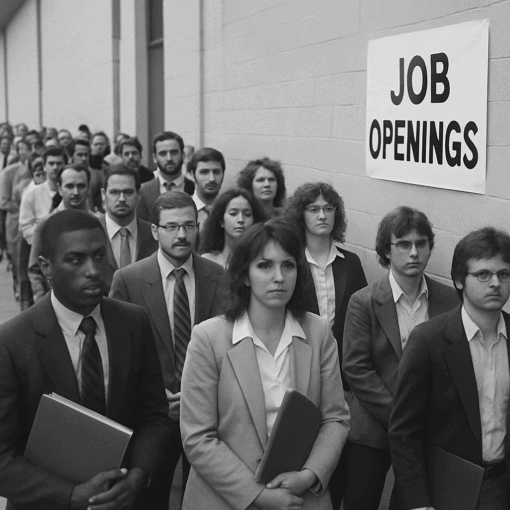
Not only are recruiters telling us that application volume has increased the data is backing up their experience. An internal executive recruiter within a Fortune 500 company shared that she only leaves a job post up for 24 hours because within that time they’re inundated with 1,000+ applications and can barely get through the first 100.
Tom Powner, a member of NRWA and the creator of the NCOPE (Nationally Certified Online Profile Expert) program who also runs his own search firm reports that they’re seeing 1,000-3,000 applications per job posting on LinkedIn. In fact, 65% of recruiters have stopped posting jobs on LinkedIn altogether and are instead searching for candidates treating the site like a large database they can sift through.
LinkedIn dominates all major job application sites as the most popular. It gets 80% of the job saves according to Job Tracker site Huntr. In Q2 of 2025 they processed more than 114,000 applications.
It’s no wonder that recruiters are unable to respond to every application. They’re inundated and can’t keep up.
Reviewing these applications takes time. Even well-organized companies struggle to sift through hundreds of resumes efficiently. That’s why so many rely on ATS for filters and AI for screening. They also use screening questions to knock out candidates. Every single one of these is a tool meant to help whittle down the list to a more manageable number.
It’s not personal just another obstacle that we have to work around in our job search.
Reason 5: Lack of Communication or Feedback Culture
A lack of communication or feedback culture can significantly impact your experience, too.
Some companies prioritize roles based purely on internal dynamics, often leaving candidates in the dark.
Poor communication strategies mean even qualified applicants may not receive updates. Three reasons why this may happen:
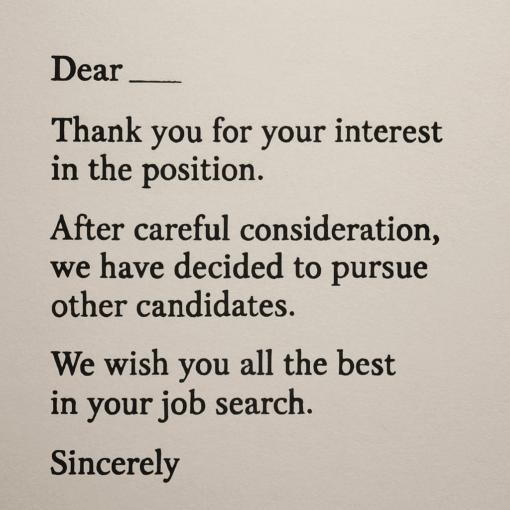
They don’t have the systems to handle communication at scale. You might think that every company has automated systems to send rejection emails or status updates, but that’s not always the case. Many organizations, especially smaller companies or those experiencing rapid growth, simply don’t have the HR technology or processes in place to manage candidate communication systematically. When they receive hundreds of applications for a single role, manually responding to each one becomes overwhelming, and your application gets lost in the shuffle.
Their hiring process wasn’t designed with candidate communication in mind. You’re dealing with teams that may have cobbled together their hiring process over time without ever stopping to think about the candidate experience. They might have a clear process for evaluating resumes and conducting interviews, but no established workflow for keeping applicants informed. When there’s no standardized process for sending updates or feedback, it simply doesn’t happen—not because they don’t care, but because no one is specifically responsible for it.
They’ve made a conscious business decision that candidate communication isn’t worth the investment. This one might sting, but some companies have calculated that the time and resources required to provide feedback to unsuccessful candidates doesn’t deliver enough business value to justify the cost. They’d rather have their hiring managers focus on evaluating new candidates than crafting personalized rejection messages. From their perspective, they’re optimizing for efficiency in filling the role, not for your experience as a candidate. It’s a short-sighted approach that can damage their employer brand, but it’s a reality you’ll encounter more often than you’d like.
I hate that this happens and these explanations in no way excuse the lack of communication. But, I also think it’s best to know what may be going on behind the scenes that is affecting your resume responses and again I have to point out that these obstacles have nothing to do with you. They’re another uncontrollable factor in your job search.
What You Can Do to Combat These Non-Response Issues
Do I 100% wish that more of the job search process was within your control as a job seeker? YES, absolutely.
Is that reality, though? No. If we refuse to accept reality and make choices based on that reality we end up feeling helpless and defeated. My job as a career coach is to help you see what you do have control over. To encourage and point you to the choices you do have and to guide you to the most effective strategies to overcome the obstacles that are a part of a broken hiring/application process.
With that said, let’s dive into some strategies that will help you navigate through or around the obstacles you’re facing to getting responses from your application.
How to overcome the ATS/AI screening obstacle
The best way to clear ATS and AI filters is to optimize your resume for the role based on the hard skill keywords listed in the job ad and the requirements of the role. This includes not only keyword mirroring but also personal brand development and strategic storytelling.
Your resume needs a curated narrative that positions you as the obvious choice for the role.
Sure, you can use AI to optimize your resume to match the role and I definitely advise you to use it for research but I strongly recommend you avoid using it for writing.
Why? Because recruiters can spot an AI-generated resume from miles away (the same way you can spot a spam email or call). You know it’s spam because you get messages like it all the time. Recruiters see so many AI-generated resumes and cover letters and they all sound the same. The only thing that will set you apart is personal branding and strategic storytelling.
The other issue is that when you optimize with AI you now have this bot vs. bot situation going on and some recruiters are rejecting resumes that score a 100% match because they’re assuming they’ve been written by AI. In fact, I read a recent study that said 80% of recruiters reject resumes written by AI.
Is this fair? Absolutely not. Recruiters can use AI to filter but then penalize job seekers for using it? Seems completely unfair to me. But, this is the hand we’re being dealt right now and we’re going to do our best to work around it.
This is why personal brand development, strategic storytelling, and insider market data are the three main pillars of our resume writing process with our clients. Optimization only gets you so far when everyone else can optimize using the same tools and strategies you’re using.
What gets you across the finish line is your unique career story.
How to overcome the internal candidates and employee referrals obstacles
The best way to beat them is to join them. Employee referrals are your best way to secure an interview and an offer. It beats every single other job search strategy. The best thing you can do to speed up your job search is to secure a referral. In this article, I share strategies to help you work towards an employee referral.
How to overcome a changing hiring process
Honestly, there’s not much you can do to overcome this obstacle. If the company halts hiring then everything is at a standstill. That doesn’t leave you without options, though.
This is one reason why you always want several irons in the fire. You never want to have all your job search efforts hinging on one application, interview or offer. You need to keep up your job search efforts all the way through until day one on the job. I wouldn’t even stop with a signed offer. I’ve seen too many candidates have an offer rescinded and have to start over from scratch.
If the company is a dream company – it’s in your top 5, then I’d continue working toward an employee referral because eventually the tides will turn and then you’ll have a connection in your network ready to pass your resume along to the hiring manager.
How to overcome high volumes of applications
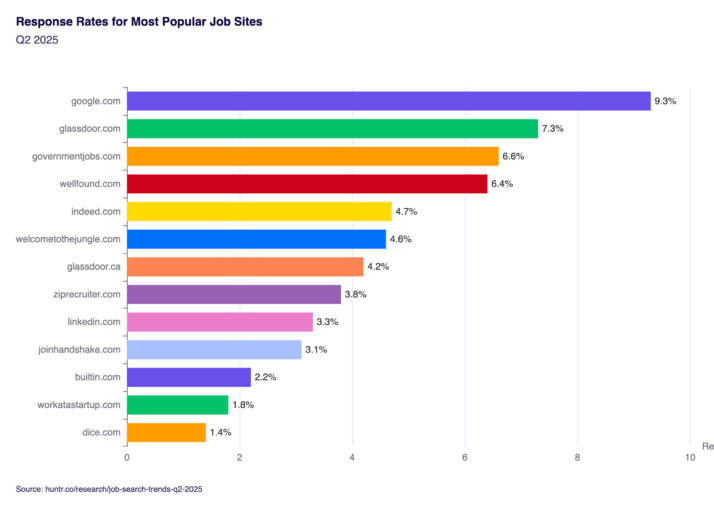
If everyone is going left, then you go right. In this case, if 80% of job seekers are using LinkedIn and it’s response rate is a deflating 3.3% look at Google Jobs, Wellfound, or Glassdoor each site has a 2-3X higher conversion rate than LinkedIn of applications to interviews.
And this is where I’m going to circle back to my advice on building relationships that work towards a referral. As we saw with my client who had the perfectly optimized resume that matched all the job requirements to a T. You can still get overlooked or lost in the shuffle. Thankfully, she had that internal contact in her back pocket who was able to pass her resume along to the right person and she could get the interview. This is the perfect example of how to work around the swarm of other applicants.
How to overcome a lack of communication and poor candidate experiences
Hopefully, it’s a case of being too small and not having the necessary tools in place to keep up with applications and the hiring process, as opposed to a conscious choice not to communicate with candidates.
If a company is intentionally choosing to leave applicants or interviewees in the lurch with little to no communication, then I’d say, phew, you dodged a bullet there. If the communication is terrible now, imagine what it would be like to work there!
If it’s a company that you know has a great culture, the best strategy would be follow up. Find an employee, hiring manager, or decision maker and connect and follow up on your application. Ideally, our goal is to build a relationship internally before applying but that’s not always possible.
Check LinkedIn to see if you have a connection inside the company, or can locate the hiring manager or decision-maker and send them a message to follow up on your application. This is another reason why employee referrals are invaluable. They can give you updates on the status of your application and help you get your foot in the door.
So What Actually Works? (This Is the Good Part)
The most effective job search strategy in 2026 is tapping into the hidden job market – any job, posted or unposted, filled through relationships and referrals rather than applications.
I know “hidden job market” can sound like there’s some exclusive secret club you weren’t invited to. There isn’t. It simply means that jobs get filled through conversations, and the people having those conversations get the interviews.
The gap between a 43% referral conversion rate and a 2.9% LinkedIn application rate is your opportunity. Read the full breakdown of how the hidden job market works and exactly how to access it here.
The good news is you don’t need to attend awkward networking events or cold-message strangers. You just have to activate the relationships you already have – former colleagues, managers, mentors, clients – and let them know what you’re looking for. When people know, they can connect you. When they don’t, they can’t.
And that’s exactly where the conversations start.
Want the exact words to say? Grab the free scripts.
Here’s the thing about knowing what to do and actually doing it: the gap between those two things is usually just not knowing what to say. So I made it easy.
I put together a free 7-pack of networking scripts – done-for-you messages you can copy, personalize, and send today. These are real messages for reaching back out to those closest to you (not strangers or cold outreach), and starting conversations that lead to referrals. No cringe or awkwardness. No “picking someone’s brain.” Just genuine conversations that open doors.
Grab the free networking scripts here and start having the conversations that actually get you hired.
Strategies for Dealing with Nonresponses and Maintaining Motivation
I realize how frustrating and ovewhelming the job searh process is not to mention applying to dozens of positions and getting complete silence back from all or most. That’s disheartening.
This is where you have to take a step back and focus on what you can control versus what you can’t. Protecting your mental health during a job search is just as important as applying, interviewing, and networking.
That’s why I invest time weekly sharing encouraging messages and prayers on LinkedIn and with my newsletter subscribers. It’s why I am always saying “keep your chin up” and “keep on keeping on”. Job searching is an arduous process and one of the most stressful life events.
To manage frustration, establish a routine that balances job searching and personal time. Set specific hours for applications, then engage in hobbies or exercise to unwind. This prevents burnout and maintains well-being.
When you’re having a particularly rough day try one of the following to help you decompress.
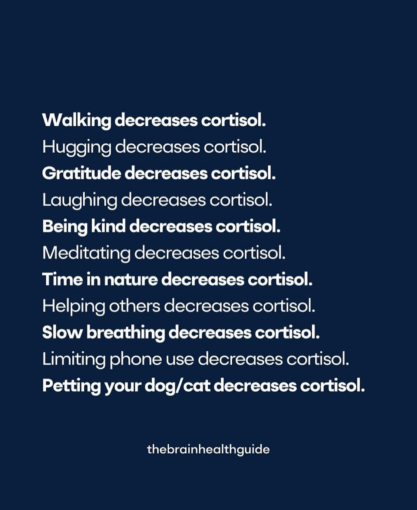
To help keep your motivation up:
- Celebrate small wins, like completing applications or networking conversations
- Set achievable weekly goals to track progress (the kind that move the needle forward like networking conversations)
- Keep a journal of your job search journey for reflection and adjustment
- Seek support from friends (who are good listeners) and who can provide encouragement and advice while you vent about how bad the situation sucks.
FAQ’s: Not Hearing Back After Job Applications
Q: Is it normal not to hear back after a job application? A: Yes – and it’s not a reflection of your qualifications. In 2026, the average job board converts fewer than 6% of applications into hires. Most applications are filtered by ATS software before a recruiter ever reads them. If they’re a Fortune 500 company, it’s likely because the volume of applications they receive makes it impossible for them to respond individually. If you receive an automated rejection email soon after applying, that’s likely because the ATS has screener questions set up, and if your answer doesn’t match the preset responses, it’s rejected.
Q: I keep applying for jobs and getting no response. Why?
It’s likely you’re not getting a response to your application because of one of the following reasons:
- The screening questions set up in the ATS automatically rejected you.
- An internal candidate or referral was offered the job.
- The position was put on hold.
- The volume of applications exceeds their ability to respond.
- Poor communication on behalf of the company, in which case, lucky you – you dodged a bullet!
Q: Why haven’t I heard back from jobs? Employers may not respond to an application because the ATS scores your resume and it may rank other resumes that are a better match for key search terms ahead of yours. It’s also possible that the company received so many applications that they weren’t able to respond to all of them. They may also have chosen an internal candidate or put the position on hold.
Q: Why am I not hearing back from any job applications? There are five reasons that have nothing to do with you or your qualifications that explain why you may not hear back from your job applications:
- The screening questions set up in the ATS automatically rejected you.
- An internal candidate or referral was offered the job.
- The position was put on hold.
- The volume of applications exceeds their ability to respond.
- Poor communication on behalf of the company, in which case, lucky you – you dodged a bullet!
It’s also possible that your resume isn’t specific enough to the job to be deemed a fit. This is especially true if you’ve written a generic resume instead of one tailored to one specific position. If your resume doesn’t mirror the key hard skills within the job description, convey how you’ll add value and make the company better, and how you do so differently than other candidates, it’s likely your resume and application will be passed over.
Q: How long should I wait before following up on a job application? A: One week is a reasonable window for a polite follow-up to the hiring manager or recruiter if you can identify who that is. That said, if the posting is more than 30 days old, it may be a ghost job – a role that’s listed but not actively being filled – and your time is better spent pursuing referral-based opportunities.
Q: Why don’t employers respond to job applications? A: A few reasons: ATS software auto-rejects a large percentage of resumes before a human sees them; many postings are ghost jobs with no active hiring behind them; and the volume of applications – sometimes 1,000+ in 24 hours – makes individual responses impractical. The system is broken in ways that have nothing to do with you.
Q: What’s the best way to get a job when applications aren’t working? A: Shift your energy toward referral-based job searching – also called tapping into the hidden job market. Referral hires convert at 43%, compared to under 3% on LinkedIn. That means telling people in your existing network what you’re looking for, optimizing your LinkedIn profile so recruiters can find you directly, and having real conversations instead of submitting applications into a void.
Q: Does applying to more jobs increase your chances of getting hired? A: Not in the current market. Volume applying on job boards with a 2.9-3.1% conversion rate is a low-return strategy. One targeted referral conversation is statistically more likely to lead to an interview than 50 cold applications. Quality of connection beats quantity of applications every time right now.
Keep Moving Forward in Your Job Search
It’s important not to lose heart, even when responses are few and far between. When you understand the common reasons for the lack of response you’re seeing, you can set reasonable expectations to manage disappointment and maintain hope as well as refine your approach to include strategies that are effective right now. With patience and persistence, the right opportunity will come your way. Keep on keeping on, friend. I’ll be here cheering you on!
Ready to improve your job search by focusing on the most effective job search methods?
The job search silence you’re experiencing isn’t a sign that you’re not good enough or that you don’t have the right experience/qualifications. It’s a sign of the current low-hire, low-fire market, plus ATS filters, ghost jobs, AI-identical resumes, recruiters who’ve stopped posting, and impossible competition on job boards, all of which have combined to make cold applications one of the least effective ways to land a job in 2026.
The candidates getting hired are the ones having real conversations. And those conversations don’t have to be complicated or awkward – they just have to happen.
Want help with starting the conversation?
I created a free 7-pack of networking scripts specifically for job seekers who know they should be reaching out but freeze when they sit down to write the message. These aren’t generic templates. They’re real, human messages that sound like you (not a LinkedIn bot), written to help you reconnect, reach out, and start a conversation about your job search.
Consider this your permission slip to stop refreshing job boards and start having the conversations that are actually getting people hired right now. Yes, I want the free networking scripts!
Share this post:



About the author
Jessica Hernandez, President, CEO & Founder of Great Resumes Fast
Hi, I’m Jessica. I started this company back in 2008 after more than a decade directing hiring practices at Fortune 500 companies.
What started as a side hustle (before that was even a word!) helping friends of friends with their resumes has now grown into a company that serves hundreds of happy clients a year. But the personal touch? I’ve kept that.
You might have seen me featured as a resume expert in publications like Forbes, Fast Company, and Fortune. And in 2020, I was honored to be named as a LinkedIn Top Voice of the year!
I’m so glad you’re here, and I can’t wait to help you find your next perfect-fit position!
Improve Your Resume: Download Your Free Executive Resume Template Today
Are you struggling to create an executive resume that will impress employers? Download this free executive resume template and receive a series of 10 emails with expert guidance on how to write resume content that resonates with employers so you get more interviews.
It's everything you need to stand out, make an impression, and accelerate your job search.
Work with Us