 A Golden Rule Company
Stop Writing Boring Resumes: 3 Keys to Standing Out (That Actually Work)
Last Updated on July 28, 2025 by Jessica Hernandez
How to Turn Your Executive Resume Into an Interview-Generating Machine
Here’s what I want for you: Every time a hiring manager reviews your resume, I want their gut reaction to be, “I need to call this person right now.”
90% of job seekers completely miss the boat on at least one of the three keys to a knockout executive resume. And by knockout, I mean your resume acting as an interview-generating machine that has hiring managers dialing your number before they’ve even finished reading.
By the time you finish reading this article, you’ll know exactly how to create a resume so magnetic, hiring managers will be chasing you down instead of the other way around.
Ready? Let’s dive right in.
Step 1: Brand Yourself Like You Actually Matter 🎯
Your personal brand is how you show hiring managers why they absolutely need you on their team. Not just any executive. YOU specifically.
Personal branding does the heavy lifting for you. You develop a reputation that walks into the room before you do.
It’s what makes hiring managers think, ‘We need this person on our team’ before they even meet you. It’s how you help hiring managers mentally connect the dots between you and the position you want. It’s also how you stand out in a fiercely competitive market.
WHY PERSONAL BRANDING MATTERS MORE THAN EVER
Branding is a two-part process. It’s about who you are and who your target audience is, just like in marketing.
You need to understand who your customers are, what they want and need, their pain points/problems, and how your product alleviates those issues.
Great brands market their products to their target audience by explaining how their product addresses the audience’s pain points. They’re memorable. They evoke some type of emotion or reaction.
Your personal brand marries who you are and how you help alleviate the pain for your target audience so that the hiring manager feels the weight lift off their shoulders and thinks, “You’re exactly who we’ve been looking for.”
Let’s use shampoo as an example. No matter what type of hair you have or what you struggle with, there’s a shampoo out there for you.
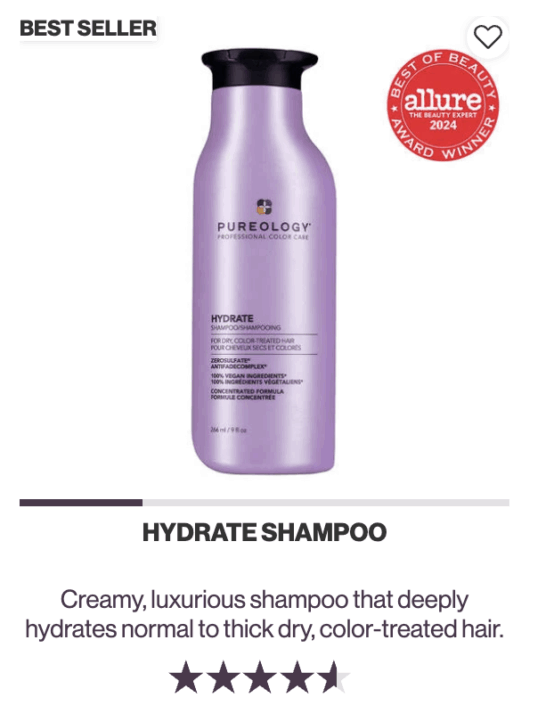
Take Pureology—they cater to customers who seek clean shampoos free from sulfates. But within their line, they offer options for every need:
– Dry, thick hair? They offer a hydrating shampoo
– Dry, thin hair? Try their hydrate sheer shampoo
People want options customized to their exact needs.
Employers work the same way. They don’t want just any executive; they want the one who solves their specific problems.
Your job? Figure out how your experience aligns with what they actually need, then talk about it in THEIR language.
Not the jargon from your last role or some corporate buzzword soup. The words that actually matter to the role you want.
HOW TO UNCOVER YOUR EXECUTIVE BRAND
When we work one-on-one with our executive clients, we dive several layers deeper than surface-level questions to uncover the authentic brand that’s been there all along. While our process is comprehensive, you can start exploring your brand right now.
Start by getting laser-focused on these questions:
About Your Target Companies:
- What industries and specific companies are you targeting?
- Who makes the hiring decisions for these roles?
- What are the biggest challenges your industry is facing right now?
- What keeps your target hiring managers up at night?
- Why do they hire someone in your target role? (What problems does this position typically solve?)
About Your Unique Value:
- What gets you energized at work? When do you feel most alive professionally?
- What do colleagues consistently ask for your advice on?
- How do you approach challenges differently than your peers?
- What value do these differences bring to organizations?
- What can you deliver that others with similar titles can’t or don’t do as well?
Once you’ve gathered this intelligence, you can move to step two.
Want to see exactly how this personal branding translates to your resume? [Grab my free executive resume template that shows you the exact format hiring managers love →]
Step 2: Tell Stories That Sell (Not Bore) 📖
Here’s where you might hit a wall… You write resume bullets that sound impressive but tell the wrong story to the wrong audience at the wrong time.
This is hands down the most critical piece of the puzzle. You can write compelling stories, but are they the stories your target employer needs to hear? Do your results directly address the pain points you uncovered in step one?
Your brand will be reflected in the details you share about how you delivered results. These details demonstrate your work style, strengths, and philosophies.
The verbs and specifics you choose will build your brand. When we’re crafting a client’s resume, every single word is strategically chosen based on months of market research and hiring manager psychology—nothing is left to chance.
You want to write accomplishments that SELL with specifics and your WOW factor.
The Strategic Matching Process
The mining process we use with clients goes far beyond this simple exercise—we have proprietary frameworks that you might find overwhelming to tackle on your own.
However, here’s a simplified version of our analyze and mine process that you can use by creating a handwritten T-chart:
The Process:
– On the left, write the qualifications, experiences, and skills you possess
– On the right, list the qualifications, skills, and experiences the employer needs
– Then match them up using the language of the employer/industry/role you’re targeting

Ready to see this strategic matching in action? [Download my free executive resume template that demonstrates exactly how to position your experience →]
Once you have your list of matching skills, qualifications, and experience, it’s time to think about stories that reflect them. Ask yourself:
What experiences demonstrate that you match the skills or experiences of a “preferred” candidate? Try to list three examples.
What experiences demonstrate that you have resolved problems similar to those your target audience is looking to solve? Give three examples.
When you’re writing, make sure you’re spending your time on stories that align with and demonstrate the skills that match the needs of the role.
The C.A.R.T. Formula for Executive Stories:
- Challenge: What was the problem or situation?
- Action: What action did you take? Who else was involved? This is usually an action verb to start the bullet.
- Result: What measurable outcome did you achieve? What did you learn? The result should follow the action verb. Don’t be fooled, results are not always tied to revenue generated. Here’s a LinkedIn post I wrote explaining how to quantify results not tied to money.
- Tie-back: How does this relate to the skills/experience the company is looking for?
This is where you might hit a wall—translating your stories into language that makes hiring managers’ ears perk up. It’s like learning a new dialect, and honestly? You’ve probably been there; winging it and wondering why no one’s calling back.
I’ll die on this hill… Generic resume bullets that could describe anyone’s job are resume killers.
Executive-Level Examples:
- Transformed and led 200-person fitness program by developing innovative training program delivering continuous 20% improvement of physical fitness. Awarded leadership of group training for 2,500 personnel.
This shows transformation leadership and scalable impact. No industry jargon, just results.
Here are two resume bullets from an RN who made the leap to VP (and landed an $80K raise). She had the leadership experience, but her resume wasn’t telling her story strategically.
Her resume needed to connect the dots for hiring managers and SHOW them she was an executive leader. Once we revamped her resume, she landed the VP of Healthcare role. You can see her full resume and read her case study here.
- Delivered $10M soft savings, overhauling processes and practices, achieving 4x efficiency and productivity increases.
- Halted 60% business loss, navigating URAC reaccreditation within first 8 months—restructured clinical operations, built policies and procedures, revamped training.
Mastering this formula takes practice and an understanding of what hiring managers actually care about (and it’s not what most people think).
Want to see the C.A.R.T. formula applied in a real executive resume? [Check out my free template that shows you exactly how to structure these compelling stories →]
Focus on stories that align with your target role’s requirements and showcase your biggest wins. Make every bullet count.
Next up, captivating hiring managers with a custom resume.
Step 3: Make It Irresistible to Read ✨
Now that you have focused positioning and compelling stories, it’s time to package everything for maximum impact.
Prioritize Like an Executive
Lead with what matters most. Your first bullet point under each role should be your most relevant and compelling achievement. Think like the executive you’re targeting. What would grab their attention immediately?
Prioritize stories that:
- Align most closely with your target role requirements
- Demonstrate your biggest business wins
- Show proof of value, not just scope of responsibility
Write Results-Focused Summaries
Your career summary should highlight value delivered, not capabilities or duties. Focus on what you’ve actually accomplished, not what you could potentially do.
Skip these overused phrases:
- “Seasoned executive with…”
- “Results-oriented leader…”
- “Proven ability to…”
- “Skilled at…”
Instead, lead with specific outcomes:
- “Generated $50M revenue growth across three business units”
- “Led digital transformation that increased operational efficiency by 40%”
- “Built and scaled teams from 50 to 500 employees during rapid expansion”
Pro Tip: These overused phrases are killing your credibility. Hiring managers’ eyes glaze over the second they see this stuff.
- innovative leader
- dynamic leader
- performance driver
- persuasive communicator
- seasoned executive
- accomplished professional
- results-oriented leader
- service-oriented professional
Format for Executive Attention Spans
Your resume’s design has one job: grab the reader and drag their eyes straight to your biggest wins. Think of it like a well-designed website; you want them to see your biggest wins first, not get lost in the weeds.
Use a hybrid resume format with a concise, results-focused summary followed by reverse chronological work history. Want to see exactly what this looks like? Grab my free executive resume template that features this proven hybrid design →
You can use bold, color, shading, and borders without any issues. These are acceptable in nearly all resume parsing systems. Be cautious with tables, as they are parsed differently in various systems.
Here’s a quick modern resume design checklist to guide you:
Keep It Scannable:
- Write in short paragraphs (3 lines maximum)
- Use bullet points that are 2 lines or less
- Limit to 4-5 bullets per position
- Break up longer lists with subheadings
Use Strategic Formatting:
- Add borders to distinguish sections
- Use light shading to draw attention to key achievements
- Ensure adequate white space for easy reading
- Maintain consistent margins (.5″ to .8″)
Favorite pro tip: Use a border box and shading to highlight accomplishments instead of the color and shading around the key skills list. Your goal is to draw the eye to the things that matter – those three big wins.

Ready to see all three steps come together? [Check out these executive resume examples that demonstrate the complete formula in action →]
And don’t forget—once your resume is dialed in, your LinkedIn profile needs to match that same magnetic energy. [Get my free LinkedIn optimization training here →]
Look, my goal is simple… When a hiring manager reads your resume, I want their first thought to be, ‘Holy cow, I need to talk to this person.’ And trust me, getting this formula right is the difference between landing interviews and wondering why your phone isn’t ringing.
Your resume must do three things to make this happen:
- Position your personal brand clearly
- Prove your value with strategic stories
- Present everything in a decision-maker-friendly format
This is exactly how we approach executive resume development with our one-on-one clients—helping them advance their careers, win interviews, and land their target roles.
Which of these three steps is your biggest struggle? Drop a comment and let me know—I read every single one!
Ready for a knockout executive resume that clicks instantly with your dream employers? Book a 1:1 Resume Strategy Call with our expert team →
Share this post:


About the author
Jessica Hernandez, President, CEO & Founder of Great Resumes Fast
Hi, I’m Jessica. I started this company back in 2008 after more than a decade directing hiring practices at Fortune 500 companies.
What started as a side hustle (before that was even a word!) helping friends of friends with their resumes has now grown into a company that serves hundreds of happy clients a year. But the personal touch? I’ve kept that.
You might have seen me featured as a resume expert in publications like Forbes, Fast Company, and Fortune. And in 2020, I was honored to be named as a LinkedIn Top Voice of the year!
I’m so glad you’re here, and I can’t wait to help you find your next perfect-fit position!
Improve Your Resume: Download Your Free Executive Resume Template Today
Are you struggling to create an executive resume that will impress employers? Download this free executive resume template and receive a series of 10 emails with expert guidance on how to write resume content that resonates with employers so you get more interviews.
It's everything you need to stand out, make an impression, and accelerate your job search.
Work with Us